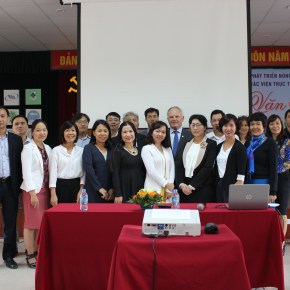
A preliminary study in Ba Vi, a northwest district of Hanoi in 2017, provided indicators of livestock emission factors which could be compared with the estimated emission factors. The study was carried out by scientists from the Institute of Agricultural Environment (IAE), the Vietnam National University of Agriculture and ILRI who presented their findings at a seminar on ‘Greenhouse gases in livestock sector in Vietnam’ at ILRI’s Hanoi office on 19 October 2017. Continue reading
Author Archives: Chi Nguyen
Animal health experts discuss approaches for tackling brucellosis in India
Towards the end of the peri-urban human animal environment interface (PeriMilk) project that the International Livestock Research Institute (ILRI) has been implementing in India together with the Public Health Foundation of India and Indian universities, ILRI invited 30 brucellosis and animal health and zoonoses experts to a one-day workshop. Continue reading
Lancet Countdown 2017 report shows climate change already damaging health of millions globally
Originally posted on AgHealth:
The Lancet Countdown tracks progress on health and climate change and provides an independent assessment of the health effects of climate change, the implementation of the Paris Agreement and the health implications of these actions. The research evidence thus generated will help to inform decision-making and drive an accelerated policy response…
Vietnam partners propose One Health platform to translate research to policy and practice
The platform was initiated at a workshop that reviewed the achievements of a One Health partnership comprising the three organizations. At the 19 November 2017 meeting, ILRI, NIVR and HUPH reviewed One Health research activities in the country and discussed the future of One Health and their partnership modalities.
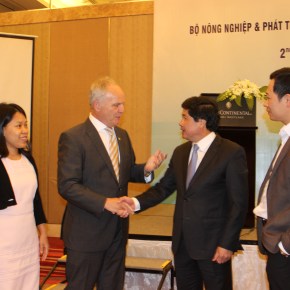
Vietnam agriculture officials and CGIAR draw up priorities for joint research in 2018-2020
MARD shared its research objectives and development plans for the country’s agricultural sector, including possible areas of cooperation for 2018-2020. Priority areas of cooperation were identified and CGIAR centres in Vietnam updated the officials on their research achievement and plans in the country. Continue reading
University of Melbourne students learn use of One Health approaches in livestock research from ILRI researchers in Vietnam
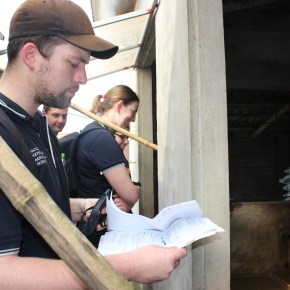
A group of four students from the University of Melbourne, School of Veterinary Sciences participated in a two-week internship with the International Livestock Research Institute (ILRI) in Vietnam to learn about the use One Health/EcoHealth approaches in livestock and food safety research, policy, and practice. Continue reading
Artificial insemination for swine launched in Nagaland, India
On 7 October 2017, the technology of swine reproduction through Artificial Insemination was launched in the state of Nagaland, India for the first time benefiting both swine livestock producers and the quality of swine. Continue reading
New project to strengthen food safety in Cambodia
A new initiative that will address growing food safety concerns in Cambodia was recently unveiled. Funded by the United States Agency for International Development (USAID) under the Feed the Future Innovation Lab for Livestock Systems (LSIL), the ‘Safe Food Fair Food for Cambodia’ (SFFF Cambodia) project kicked off in a workshop held in Phnom Penh on 31 August and 1 September 2017. Continue reading
Improving capacity development on role of gender in pig research in Vietnam
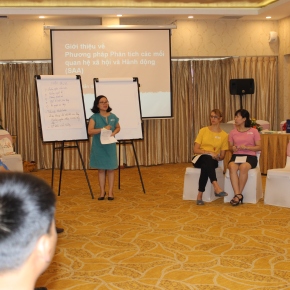
From 13-15 September, eight researchers and partners working in Vietnam under the ‘Market-based approaches to improving the safety of pork in Vietnam’ project which is known as SafePORK, were recently trained in integrating gender and social aspects in their project interventions. Continue reading
Research for safer pork products in Vietnam
A two-day workshop, 7–8 September 2017, on the topic ‘Improving food safety along the pork value chain—lessons learned and ways forward’, kicked off at the Hanoi Hotel on Thursday morning to find ways to make sure that pig production, processing and sale of pork is safer. Continue reading